Blog
Céline Dostaler
Military Justice in the Spotlight: What the Proposed Reforms Mean for Defence Rights
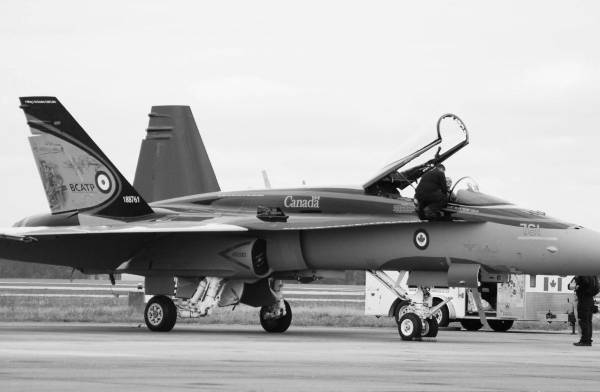
When we think of criminal defence in Ottawa, we often think of civilian courts — but right in our backyard (or up the highway, in Petawawa or Pembroke) lives an entirely different system: the military justice system.When we think of criminal defence in Ottawa, we often think of civilian courts — but right in our backyard (or up the highway, in Petawawa or Pembroke) lives an entirely different system: the military justice system.
With the recent reintroduction of the Military Justice System Modernization Act, change is imminent. What do these reforms mean for service members accused of wrongdoing, and how do their rights compare to those of civilians? If you or someone you know serves in the Canadian Armed Forces (CAF) — especially in or near the Ottawa–Petawawa–Pembroke corridor — you should understand both how the system works now and what may shift.
1. Canada’s Military Justice System: Structure & Purpose
The legal foundation: National Defence Act & Code of Service Discipline
The military justice system in Canada is built around the National Defence Act (NDA) and its Code of Service Discipline (CSD) (Part III of the NDA).
Members of the Regular Force (and sometimes Reserve Force under certain conditions) are bound by the CSD, which includes service offences — breaches of discipline, insubordination, dereliction, and, in many cases, offences drawn from the Criminal Code (or equivalent) when committed in a military context.
While the system is parallel to civilian criminal justice, it is also justified by reference to the unique needs of military discipline, efficiency, and morale. The Supreme Court has repeatedly affirmed that a separate military system is permissible so long as it respects constitutional norms.
Courts martial and process
When a member is charged under the CSD, the process may lead to a court martial. The Court Martial is a military tribunal (like a special trial court) that adjudicates service offences. Appeals from courts martial go to the Court Martial Appeal Court of Canada (CMAC).
Unlike civilian trials, military trials may have different rules and procedures (e.g. composition of panel, sentencing norms, chain-of-command considerations) — although over time reforms have narrowed gaps.
Why a separate system?
The rationale is practical: the armed forces demand discipline, prompt adjudication, and chain-of-command integrity. A purely civilian model might be ill-suited to the demands of military readiness. But that justification does not grant carte blanche: the system must still respect Charter rights, due process, fair trial standards, and procedural safeguards.
Because the system is distinct, defence in military proceedings demands specialized knowledge of its rules, customs, and chain-of-command dynamics.
2. Defence Rights (Currently) Under Military Law — Strengths & Constraints
Before we talk about what may change, it’s crucial to know where we stand now.
Constitutional overlay: Charter protection
Even within the military justice system, service members retain Charter rights — e.g. protection against unreasonable search and seizure, rights upon arrest/detention, right to counsel, and so on. Courts have held that military tribunals must respect minimum standards of fairness.
However, there are recognized exceptions or modifications due to the military context. For example, section 11(f) (right to jury trial) is partially modified: serious civilian offences may be tried as service offences and thus fall under the military exception. In R v Stillman, the Supreme Court addressed whether provisions converting civil offences to service offences infringe section 11(f).
Thus, not all rights map identically from civilian to military context.
Investigations, chain of command & military police
One major difference is who investigates. In many military cases, Military Police have authority to investigate. Chain-of-command influence and military culture can affect access, disclosure, or investigative momentum. Defence counsel must often push for disclosure of military policing records, internal reports, command influence, and procedural irregularities.
Another constraint is military secrecy, orders, confidentiality, and classified materials. Defence counsel may face restrictions on access to certain documents, especially in security-sensitive or operational files.
Command influence and bias risk
Because the military is hierarchical, there is always a risk of command influence (real or perceived). A commanding officer’s views, operational priorities, or reputational interests may subtly or overtly influence decisions to charge, termination, or disposition. Defence counsel must be alert to any sign of undue influence or bias in decision-making.
Differences in disclosure and procedures
- Disclosure obligations may be more limited, or subject to classification or operational privilege
- Some procedural variances: rules around admissibility, hearsay, “military necessity” doctrine
- Punishment and sentencing norms may differ: the available sanctions in a court martial may reflect discipline, not just punishment
Appeal structure & review
As noted, appeal lies to CMAC, and potentially to the Supreme Court of Canada (usually by leave).
However, because fewer precedents exist, there can be less predictability in how Charter issues, command influence, or procedural defects are handled.
3. What the Proposed Military Justice System Modernization Act Would Change
In September 2025, the government reintroduced a bill to amend the NDA and modernize the military justice system — formerly Bill C-66 (which lapsed) — now reborn as Bill C-11 under the title Military Justice System Modernization Act.
The government frames it as responding to recommendations by independent reviews (Arbour, Fish) to align military justice more closely with the civilian model while preserving necessary military functions.
Here are key proposed changes:
Removal of CAF jurisdiction over Criminal Code sexual offences
One of the boldest reforms: the Act would remove the Canadian Armed Forces’ authority to investigate or prosecute alleged Criminal Code sexual offences committed in Canada. Those would instead be handled exclusively in civilian courts.
This shift seeks to address serious criticisms that military prosecutions of sexual crimes are perceived to lack independence and fairness, especially given power dynamics in the institution. It also aligns with Recommendation 5 from Justice Arbour’s external review.
For defence counsel, this could mean that sexual assault allegations against service members are tried in civilian court rather than courts martial — a significant jurisdictional shift.
Strengthening independence of military justice actors
The Bill proposes modifications to how key actors are appointed and supervised:
- Director of Military Prosecutions
- Director of Defence Counsel Services
- Provost Marshal (to be renamed Provost Marshal General)
These roles would have more independence and less direct command influence.
Harmonization of publication bans, offender registry, and sex offender info
The Bill seeks to align military justice rules regarding publication bans, sex offender information, and related registry provisions with recent changes made in the Criminal Code and Sex Offender Information Registration Act.
This is especially relevant given that publication ban and registry rules have been in flux in civilian law; this alignment would help reduce inconsistencies.
Broader eligibility and modernization of process
Other proposed reforms include:
- Expanding who may be appointed as military judges (broadening eligibility criteria)
- Modifications to command and oversight structures in the military judiciary
- Clarifying the Judge Advocate General’s superintendence role to better respect independent decision-makers in the system.
4. Service Members’ Rights vs Civilians’ Rights: Key Differences & Convergences
In practice, even after reforms, some differences will likely remain. But the gap may shrink in important areas.
Discretion and command vs autonomy
Civilians face prosecutors and police who (ideally) operate independently of hierarchical control. For service members, even with reforms, the chain-of-command and military structure may still influence investigations and prosecutions. Reforms seek to reduce that influence, but residual dynamics may remain.
Separation of powers, oversight, and complaint routes
Civilians have multiple oversight mechanisms: civilian police oversight agencies, judicial review, public complaints commissions, and media scrutiny. For CAF members, oversight is more internal, though reforms propose to improve interference complaint mechanisms to allow members to raise concerns about improper command or political influence.
Also, transparency in military judicial appointments and decisions (especially around sexual offences jurisdiction) may improve public confidence and prevent perception of closed systems.
Sentencing, punishments, and rehabilitation
Civilians convicted in criminal courts have access to a well-developed sentencing jurisprudence, parole regimes, and reintegration frameworks. Military sentencing incorporates disciplinary sanctions that reflect the needs of the force (removal from duty, discharge, imprisonment). Some reforms may bring the military system closer to civilian sentencing principles, but differences may remain.
Appeal and judicial review
Civilians appealing in the criminal system often have more robust jurisprudence and higher volumes of precedent. Military appeals are narrower, but reforms could strengthen the clarity, procedural protection, and possibility of external oversight.
7. Why You Need Specialized Counsel — And What I Offer
The proposed reforms to military justice are significant but complex. For service members in Ottawa, Petawawa, Pembroke or the surrounding region, an ordinary criminal defence lawyer is often not enough. You need someone who understands:
- Military statutes, the National Defence Act, the Code of Service Discipline
- JAG, base legal offices, command dynamics, and operational secrecy
- Rights within military proceedings, and how those differ (or may change) under reform
- The local terrain — where the clients live, where the bases are, how military-community interactions affect perception
If you are a service member, a reservist, or someone facing a service-related allegation in the Ottawa / Petawawa / Pembroke region, it’s critical to have counsel who understands both the military world and criminal defence fundamentals.
Contact me, Celine Dostaler, for a confidential consultation. Let’s assess your case and build a defence strategy tailored to your unique position and risk. The reforms on the horizon may help—but only if your approach is strategic from day one.