Blog
Céline Dostaler
Facing a Firearm Offence in Ontario? What You Need to Know About Charges, Defences, and Sentencing
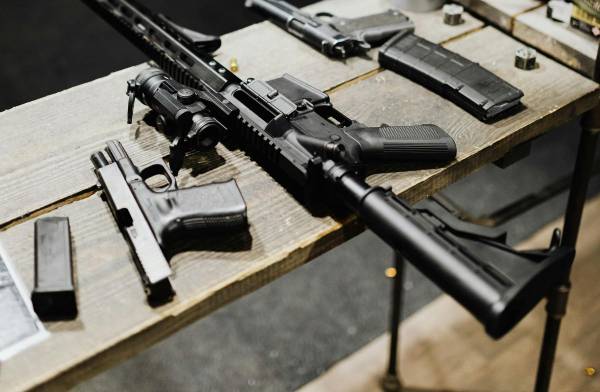
In Canada, firearm offences are among the most serious criminal charges you can face. Whether you’re accused of unlawful possession, unsafe storage, or using a gun in the commission of another crime, the consequences can be severe—including mandatory minimum sentences and a lifelong criminal record. Many people charged with these offences don’t even realize how technical the law is or how easily simple mistakes can lead to serious legal consequences.
If you’ve been charged with a firearm offence in Ottawa, Kanata, Orleans, Pembroke, Perth, Brockville, or L’Orignal, it’s critical to understand what you’re facing—and what defences may be available to you. In this blog, we’ll explain common firearm offences under the Criminal Code, possible legal strategies, and how sentencing works in these high-stakes cases.
Common Firearm Charges in Ontario
Under the Criminal Code of Canada and the Firearms Act, there are several categories of firearm-related offences. Some of the most common include:
1. Unauthorized Possession of a Firearm (s. 91 and s. 92)
This offence occurs when someone possesses a firearm without a valid licence or registration certificate. Even if the firearm is never used or discharged, just having it without proper documentation is a criminal offence.
- Section 91(1): Possession without a licence
- Section 92(1): Knowingly possess without a licence (a more serious offence)
2. Unsafe Storage or Handling of a Firearm (s. 86)
This charge can arise when a firearm is stored in a way that violates federal regulations. For example, a gun left loaded or unsecured in a home—even if licensed—can result in charges.
3. Possession of a Weapon for a Dangerous Purpose (s. 88)
If the Crown believes the firearm was intended to be used to threaten, intimidate, or harm someone—even if it wasn’t fired—you can be charged under this section.
4. Carrying a Concealed Weapon (s. 90)
This offence applies when a person carries a firearm in a concealed manner without lawful authority.
5. Use of Firearm in the Commission of an Offence (s. 85)
This is one of the most serious firearm-related charges. If you’re accused of using a gun while committing another crime (e.g., robbery, assault), the sentence will include mandatory prison time—even for a first offence.
Understanding Firearm Classification
Firearms in Canada are categorized as:
- Non-restricted (e.g., standard hunting rifles)
- Restricted (e.g., most handguns, some semi-automatic rifles)
- Prohibited (e.g., fully automatic weapons, certain short-barrelled firearms)
Possession of a restricted or prohibited firearm without proper licensing and authorization significantly increases the seriousness of the charge and the likelihood of jail time.
The Importance of Licensing and Registration
Even if you legally purchased a firearm, it’s an offence to:
- Possess it without a valid Possession and Acquisition Licence (PAL),
- Store or transport it improperly,
- Transfer it to someone without the appropriate licence,
- Fail to register a restricted or prohibited firearm.
Ignorance of these technical requirements is not a defence. The law presumes that anyone who possesses a firearm knows the legal framework governing its use.
How Firearm Charges Affect Bail
Getting bail after being charged with a firearm offence can be challenging. The courts treat these offences seriously, especially if:
- The firearm was loaded,
- It was used or displayed in public,
- You have a prior criminal record,
- You were on probation or bail at the time of the offence.
In such cases, the onus may shift to the accused to show why they should be released—a reversal from the usual presumption of release. A skilled lawyer can present a strong bail plan, including sureties, house arrest, or counselling, to secure your release while awaiting trial.
Defending Firearm Charges: Legal Strategies
While firearm charges are serious, they are also highly technical. Your defence lawyer will explore several potential strategies to fight the charges:
1. Lack of Knowledge or Control
To be convicted, the Crown must prove that you:
- Knew the firearm existed, and
- Had control over it.
If the firearm was found in a shared home or vehicle, your lawyer may argue that you didn’t know it was there or had no control over it—especially in cases involving roommates, guests, or family members.
2. Charter Violations
Firearm charges often stem from:
- Search warrants,
- Traffic stops,
- Home searches.
If police conducted the search without a warrant or failed to follow proper procedure, your lawyer may file a Charter motion under Section 8 (unreasonable search and seizure). If the court agrees, the firearm could be excluded from evidence—leading to a dismissal.
3. Improper Licensing Records
In some cases, the Crown may incorrectly assume your licence had expired or wasn’t valid. Your lawyer can gather documentation to prove your licence or registration was current or that an administrative error occurred.
4. Issues with Storage or Transportation
Firearms must be stored and transported in accordance with federal regulations. But sometimes, the facts don’t match the allegations. For example, a gun may have been secured in a locked case, even if police initially believed otherwise.
Sentencing for Firearm Offences: What to Expect
Firearm offences are some of the most harshly punished charges in Canadian criminal law. Sentencing depends on several factors:
Mandatory Minimums
Certain offences carry mandatory minimum sentences, such as:
- 1 year for unauthorized possession of a restricted or prohibited firearm,
- 4 years for use of a firearm in the commission of an indictable offence (e.g., robbery, drug trafficking).
Judges cannot go below these minimums, even in first-time offences, unless there are exceptional constitutional grounds.
Aggravating Factors
The court may impose a harsher sentence if:
- The firearm was loaded,
- The offence occurred near a school or public place,
- The firearm was used to intimidate or harm someone,
- The accused has a prior record, especially for violence or weapons.
Mitigating Factors
On the other hand, the sentence may be reduced if:
- You have no prior record,
- You cooperated with police,
- The weapon was not used or displayed,
- You accepted responsibility early on,
- The firearm was found in a private residence, without any other aggravating elements.
Why You Need a Criminal Defence Lawyer
Because firearm law in Canada is so technical—and penalties are so severe—you should never face these charges without legal representation. A criminal defence lawyer can:
- Challenge the legality of searches and seizures,
- Negotiate with the Crown to reduce charges or avoid jail time,
- Identify gaps in the evidence or legal errors,
- Advocate for your release at a bail hearing,
- Defend you at trial, or negotiate a favourable resolution.
Conclusion: Firearm Charges Are Defensible—But You Need the Right Defence
Being charged with a firearm offence in Ontario doesn’t mean you’re automatically guilty—or that you’ll end up in prison. But it does mean you need experienced legal advice as soon as possible. Firearm charges are serious, technical, and often unforgiving under the law.
If you’ve been charged in Ottawa, Kanata, Pembroke, Perth, Brockville, or L’Orignal, I can help. As a criminal defence lawyer, I will examine every aspect of your case and provide a clear, strategic plan to protect your rights and your future.
Charged with a firearm offence? Don’t face it alone. Call Céline Dostaler today.